
How to Make a Watch Buckle? Stamping vs Hydraulic Buckle

How to Make a Watch Buckle? Stamping vs Hydraulic Buckle


1. From Raw Material to Finished Buckle: The Production Journey
A watch buckle may look small, but it plays a crucial role in both security and aesthetics of a wristwatch. Every piece undergoes a detailed process — from stainless steel selection to forming, polishing, plating, and final inspection.
Basic Structure of a Watch Buckle
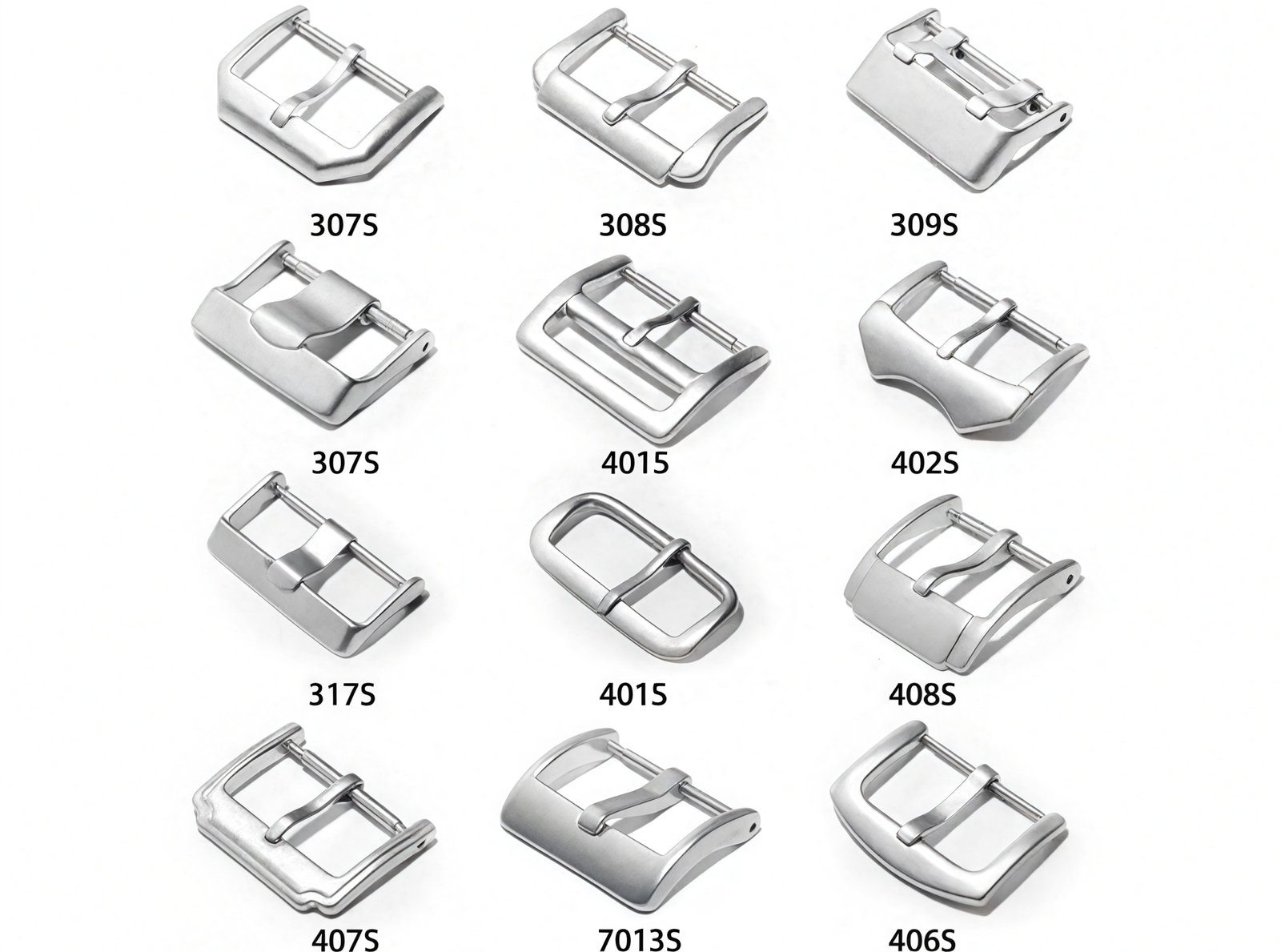
A traditional pin buckle is composed of three essential parts:
- Buckle Frame — the main body that defines the shape and connects to the strap.
- Pin (Tongue) — the movable part that inserts into strap holes to fasten the watch.
- Bar (Axle) — connects the pin to the frame and allows it to pivot smoothly.
2. Stamping Buckle vs Hydraulic Buckle
Stamping Buckle — High Efficiency and Precision

Process Flow: Steel Coil → Stamping → Deburring → Polishing → Electroplating → Assembly
- Advantages: excellent dimensional consistency for mass production; lower cost; suitable for thin and medium-thickness materials; fast production speed.
- Limitations: not ideal for thick or complex 3D structures; edges may require fine polishing.
- Common Applications: standard watch buckles, lightweight strap buckles, or simple pin designs for mid-range products.
Hydraulic Buckle — Strength and Premium Quality

Process Flow: Metal Blank → Hydraulic Forming → CNC Trimming → Mirror Polishing → Plating → Assembly
- Advantages: superior strength and density; smooth, seamless surface finish; supports complex 3D shapes and thicker materials; suitable for luxury or custom-made watch buckles.
- Limitations: higher production cost; lower output speed.
- Common Applications: luxury watch brands, high-end custom buckles, or heavy-duty strap designs.
Quick Comparison
| Feature | Stamping Buckle | Hydraulic Buckle |
|---|---|---|
| Forming Method | High-speed stamping press | Hydraulic deep forming |
| Cost | Lower | Higher |
| Thickness Range | ≤ 2 mm | ≤ 4 mm |
| Precision | ±0.05 mm | ±0.02 mm |
| Surface Finish | Extra polishing required | Naturally smoother |
| Best For | Mass production / mainstream models | Premium designs / custom orders |
Finishing Comparison: Polishing vs Brushing vs Sandblasting
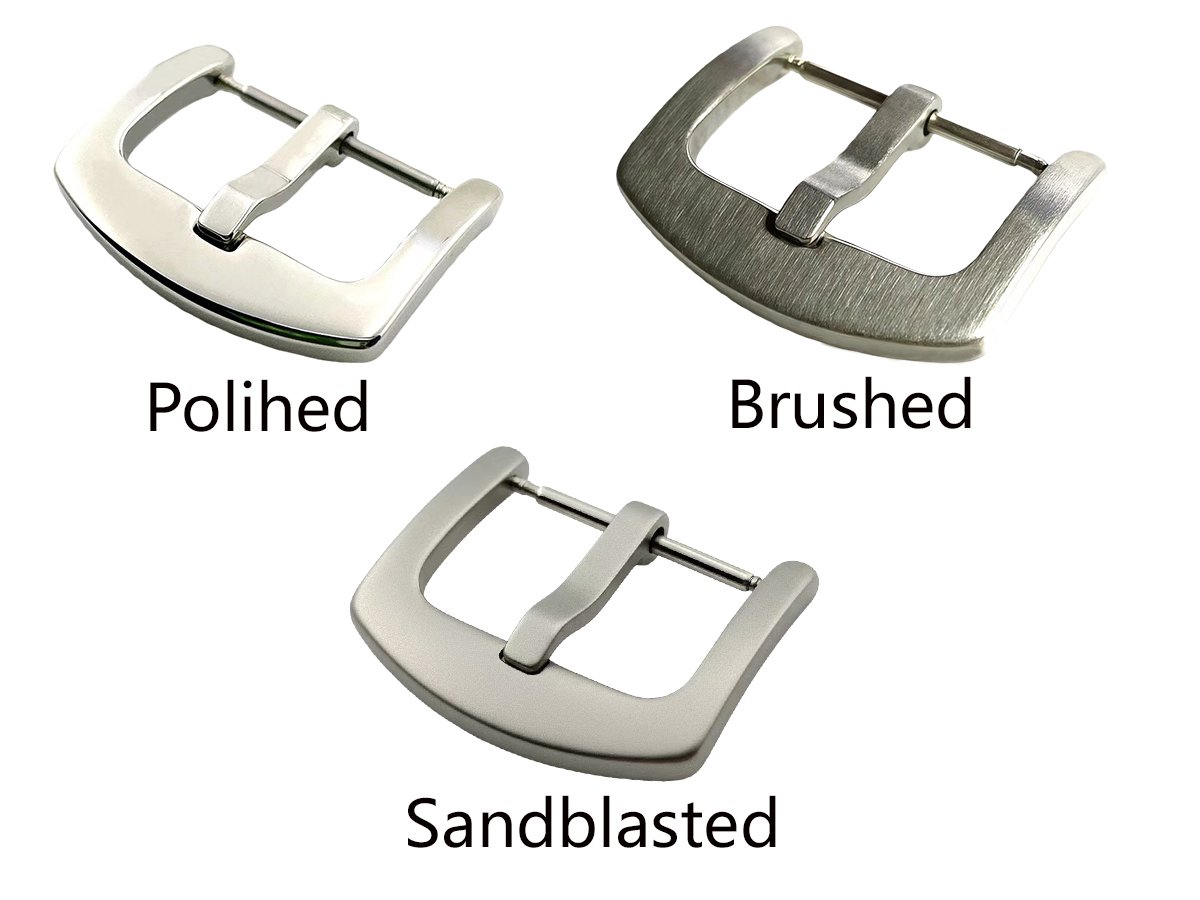
Surface finishing directly affects appearance, scratch visibility, and brand positioning. Below is a practical comparison of three mainstream finishes used on watch buckles:
Polishing (Mirror)

- Look & Feel: high gloss, mirror-like; premium visual impact.
- Pros: best for highlighting 3D shapes; easy to clean.
- Cons: fingerprints and micro-scratches are more visible.
- Typical Uses: luxury collections, dressy designs, polished edges on mixed-finish buckles.
Brushing (Hairline)

- Look & Feel: satin sheen with linear grain; technical and understated.
- Pros: hides small scratches; fingerprints less obvious.
- Cons: grain direction must match parts; repair requires controlled re-brushing.
- Typical Uses: sport/tool aesthetics, mid–high-end models, two-tone designs with polished bevels.
Sandblasting (Bead-Blast)
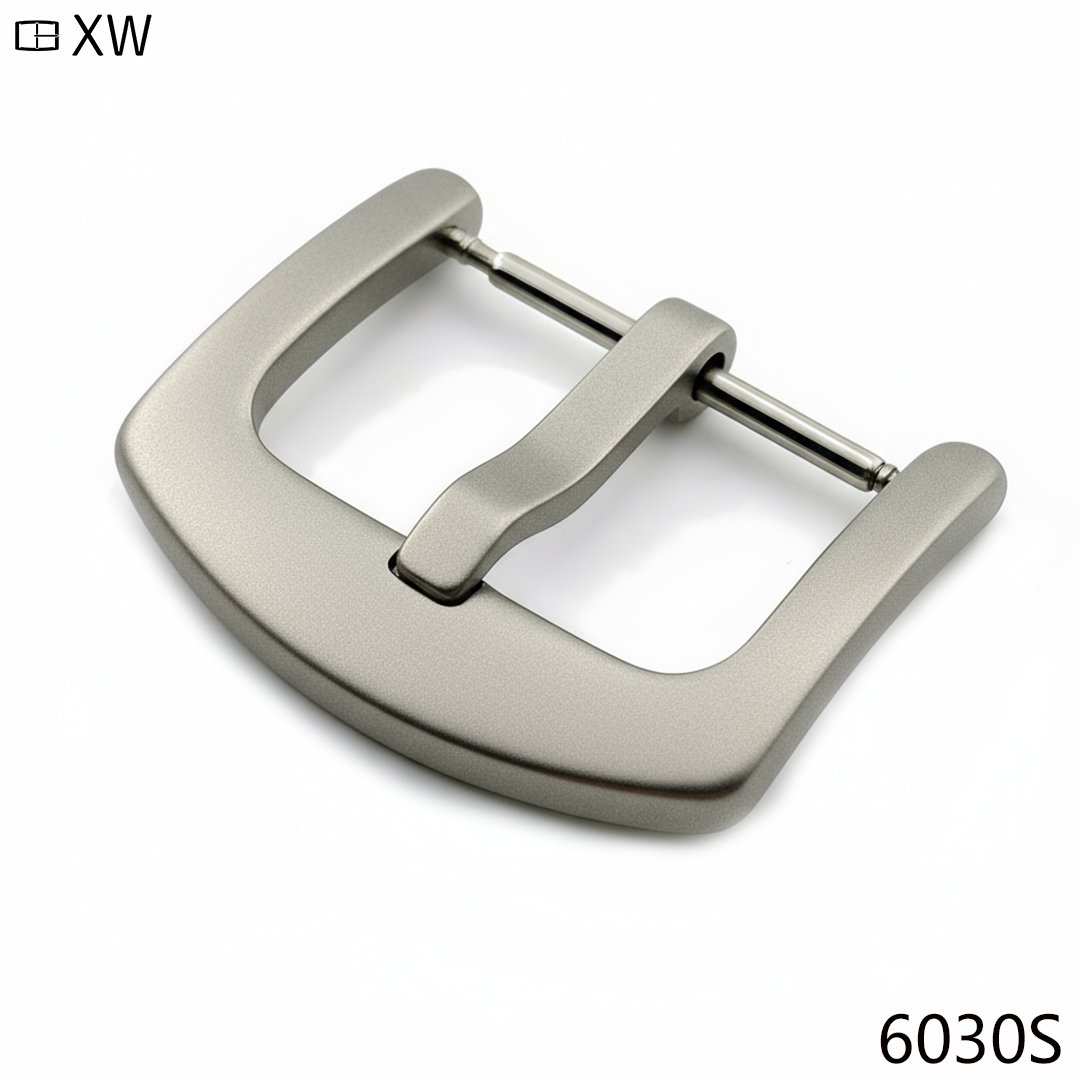
- Look & Feel: even matte, fine micro-texture; anti-glare.
- Pros: resists fingerprints; durable look for everyday wear.
- Cons: deep scratches are harder to repair invisibly; tone slightly darkens after plating.
- Typical Uses: tool/sport designs, military aesthetics, mixed-finishes with polished accents.
4. Summary: Choosing the Right Buckle Type
Pick the forming method (stamping vs hydraulic) based on structure and budget, then select the finish to match the brand style:
- Mirror-polished for premium, dressy impact.
- Brushed for technical, low-glare elegance and daily robustness.
- Sandblasted for matte, tool-like durability and anti-fingerprint performance.
FAQ
Which process is more cost-effective?
Stamping is generally more cost-effective for large volumes and standard shapes.
Which finish should I choose for daily wear?
Brushed or sandblasted finishes hide micro-scratches better and show fewer fingerprints than mirror polishing.

